Why the political parties don’t want to tell the truth. Foreign and domestic policy are often related. Countries seek mutual benefit through trade and take measures to protect their own trading routes. They make long term arrangements for mutual exchange of products and services. In the contemporary world, the manufacture of a particular product often … Continue reading Editorial—The Fall of Johnson and The Energy Crunch
Economic Policy
Political speaking before lies and propaganda
Read in this issue of Labour Affairs a speech by Winston Churchill in 1909, on taxing empty property: not only does the speech use arguments the Labour Party could deploy, but it is also a model of plain speaking (as well as witty), in the days when politicians called a spade a spade. [Tax on Capital … Continue reading Political speaking before lies and propaganda

Churchill arguing for a land tax
Winston Churchill and the 1909 Land Tax proposals Herbert Asquith became Prime Minister on 5 April 1908. In becoming Prime Minister at this time Asquith had not been elected but rather inherited the position in mid-term due to the ill-health of Campbell-Bannerman who in fact died just over two weeks later. On 30 April 1908, … Continue reading Churchill arguing for a land tax
Let’s Avoid a 1970s Rerun
The TUC have called for a large demonstration in London on June 18th in the face of the cost of living crisis. “Working people have had enough. Everything’s going up but our wages. Join the trade union movement in London to tell this government: we DEMAND better!” reads the TUC blurb. They are right and a massive … Continue reading Let’s Avoid a 1970s Rerun
Buses
Is Labour on the Buses? Dave Gardner Good public transport is key to economic success and social well-being. Compared with northern Europe, the United Kingdom, with the exception of London, is poorly served. Throughout the UK, bus services are the key to the ability to travel to work, to study, to see family and to … Continue reading Buses
On Interest Rates and Mini-Budgets
Interest Rates and Mini-Budgets Martina Seale On May 4th the Bank of England (BoE) decided to raise the Bank interest rate by 0.25% to 1%. The stated purpose of the increase is to help fight inflation. The logic that the BoE is following is really quite simple. Inflation is caused by demand for products being greater that the … Continue reading On Interest Rates and Mini-Budgets
Cost of Living
The cost of living — Parliament Notes What Labour MPs are saying in Parliament to address the cost of living crisis. Early day motion on the cost of living Motion text (presented by John Trickett; supported by John Cruddas, Diane Abbott, Kim Johnson, Bell Ribeiro-Addy; also Tony Lloyd, plus one Independent and one Green MP) 24th May … Continue reading Cost of Living
Insulation Rebellion — Editorial
Why making good policy requires careful thinking and plenty of time. Britain has just begun to face what will prove to be a long drawn-out cost of living crisis. In part this is caused by labour and supply chain shortages resulting from the Covid pandemic, but a more fundamental issue is the cost of energy, … Continue reading Insulation Rebellion — Editorial
Sanctions and Rubles
Martin Seale The members of NATO have imposed sanctions on Russia following its Special Military Operation in Ukraine which began on 24th February. NATO would clearly like these sanctions to severely damage Russia. It is unlikely that they will for two main reasons. Firstly, Russia is a currency creating state and does not therefore have financial constraints. Secondly, Russia is … Continue reading Sanctions and Rubles
Rishi Sunak’s Financial Statement
Editorial 1 Early on in his dismal Financial Statement Rishi Sunak said: “At a time when the OBR has said that our fiscal headroom could be “wiped out by relatively small changes to the economic outlook,” it is right that the central fiscal judgement I am making today is to meet our fiscal rules with a … Continue reading Rishi Sunak’s Financial Statement
Inflation 2022
A Transitory Inflation? Martin Seale The price of many of the goods that the typical consumer buys is higher than it was a year ago. Is this inflation? The last time we had inflation in the UK was in the 70s and 80s. But is what happened then similar to what is happening now? In the early … Continue reading Inflation 2022

Levelling up or Covering up?
Levelling Up or Covering Up? The government White Paper on levelling up. By Dave Gardner In 2019 the Tories won a general election largely on the basis of capturing seats that have traditionally sent a Labour MP to Westminster. These are for the most part seats in the Midlands and the North of England that … Continue reading Levelling up or Covering up?

The Destruction of Local Authorities as Housing Providers
LABOUR AND HOUSING – Part 7. The destruction of local authorities as housing providers. By Eamon Dyas Determining the economic discourse. The previous article in this series showed how building societies and banks were incapable of supplying mortgages on the scale required by the Tory Government’s 1979 Right to Buy scheme. It explained how local councils … Continue reading The Destruction of Local Authorities as Housing Providers
How to Pay For It — Q & A
How to Pay for it - 150,000 new council dwelling per year at social rents. By Michal Lerner To win the next general election, Labour must give bold answers to the question ‘How will you pay for it?’. Let us therefore imagine an interview between an interviewer (I) and a member of the Shadow Cabinet (L) and suggest … Continue reading How to Pay For It — Q & A

Labour and Housing
Labour and Housing – Part 6. The financial implications of the Right to Buy scheme By Eamon Dyas The Thatcher legacy that began as practical policies in 1979 and which continues to permeate British politics was based on a strategy consisting of three components. Firstly, the oft-repeated mantra of the need to roll back the … Continue reading Labour and Housing

What Shall I Do Next?
What Am I Going to do Next? Part 12 Where will the money come from? Dave Gardner Funding for universities through student loans: why this is a nonsense In a previous article I noted the inequality in funding between universities and vocational education. Universities get roughly five times as much money per student as do … Continue reading What Shall I Do Next?

NHS Providers
Who are ‘NHS Providers’? Feargus ORaghallaigh I found the story at the link below remarkable ... https://www.theguardian.com/society/2021/dec/13/hotels-being-used-as-care-facilities-to-relieve-pressure-on-nhs Here is a related story: https://www.theguardian.com/society/2021/dec/12/number-of-healthy-patients-stranded-in-english-hospital-wards-rises-by-80 I have long held the view that the current NHS is actually a system of hospital-led private provision of health care (much of it provided on a for-profit basis) funded by the … Continue reading NHS Providers
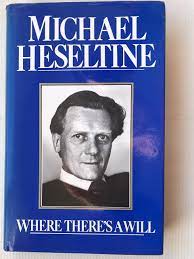
Heseltine on Privatisation
From Socialism to Popular Capitalism: ‘the revolution where everyone is a winner’. The destruction of both British industry and council housing was a deliberate policy to get away from what Thatcher and Heseltine saw as socialism, the excessive influence of the state on the economy. They saw this as their crowning achievement. Extracts from: Where there’s a Will, … Continue reading Heseltine on Privatisation

