Throughout January, there has been much excitement in the main stream media about the state of the government finances. Apparently the ‘bond vigilantes’, by reducing the amount they were prepared to pay for a government bond, were expressing their displeasure with proposed government policies. We were told that Reeves was ‘all out of money’ and would likely … Continue reading Reeves’ False Debt and Interest Problems
National Debt
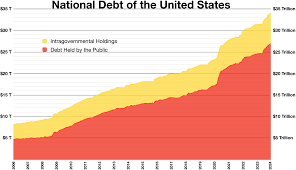
Sustainability of National Debt
The House of Lords has an Economic Affairs Committee (EAC) which has regular inquiries into economic matters that they think will be important for members of the House of Lords to understand. The structure of these inquiries is that the committee will hold a series of meetings to which it calls expert witnesses and asks them … Continue reading Sustainability of National Debt

Taxing Issues
Martin Seale Jeremy Hunt’s November Autumn Statement was a clever piece of work. It had two objectives. Firstly, to win the next general election. Secondly, if the Tory Party did not win the next general election, to guarantee that any Labour administration would fail. Hunt’s trump card in achieving this dual objective is the fiscal rule book. Hunt, … Continue reading Taxing Issues

Labour’s Economic Model – Trust the Private Sector
Martin Seale The speech by the Shadow Chancellor, Rachel Reeves, to the 2023 Labour conference shows that a Starmer government could rapidly become dysfunctional. In her speech to the 2023 Labour Party conference, Rachel Reeves stated “Today, I make this commitment to you, and to the country: Out of the wreckage of Tory misrule, Labour … Continue reading Labour’s Economic Model – Trust the Private Sector

How to pay for it. The case for the elimination of the cap on child benefit.
An imaginary interview between the BBC and a progressive Labour Party by Michal Lerner BBC: Labour says that it will eliminate the cap on child benefit. That will cost some £1.3 billion. How will Labour pay for it? LP: A Labour government will pay for it the way British governments pay for everything that has been approved by … Continue reading How to pay for it. The case for the elimination of the cap on child benefit.
Fiscal Rules – A Scam To Justify Austerity — Editorial
Early in his Autumn Statement to Parliament on 17th November, the Chancellor, Jeremy Hunt, announced two new fiscal rules: “…I also confirm two new fiscal rules. The first is that underlying debt must fall as a percentage of GDP by the fifth year of a rolling five-year period. The second is that public sector borrowing over … Continue reading Fiscal Rules – A Scam To Justify Austerity — Editorial
Animal Spirits, Taxing and Borrowing — Editorial
Kwasi Kwarteng is clearly a believer in animal spirits, or more specifically, the animal spirits of the UK private sector. The term ‘animal spirits’ was used by the economist J. M. Keynes to describe the spontaneous forces of vitality that drive human action. Apparently these animal spirits have been held back by too much taxing and … Continue reading Animal Spirits, Taxing and Borrowing — Editorial

How to pay for it. The case of Universal Credit
By Michal Lerner To win the next general election, Labour must give bold answers to the question ‘How will you pay for it?’. Let us therefore imagine an interview between an interviewer (I) and a member of the Shadow Cabinet (L) and suggest how the dreaded question should be dealt with in the context of … Continue reading How to pay for it. The case of Universal Credit
Ditch Blair’s Legacy
Ditch Blair’s legacy — Editorial Starmer became leader of the Labour Party in May 2020 on the basis of a 10 point program that Jeremy Corbyn would have had little problem supporting. Since becoming leader he has had little to say about his 10 point program and has, instead, concentrated his energy on attacking the left wing … Continue reading Ditch Blair’s Legacy
 Labour Affairs