Magnus Langton For some time the British government have been talking about the Brit Card, a physical form of personal digital identification for the British people. In September 2025 Sir Keir Starmer announced plans to launch a universal digital identification scheme in the UK. The Gov.uk website tells us the digital ID will hold: Your … Continue reading Digital I.D. it’s all a matter of trust . . .
finance
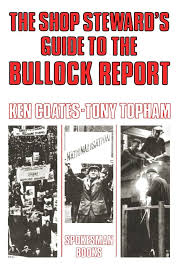
The significance of the rejection of Bullock by the Trade Unions
In the 1970s, the trade unions were so strong they had political power, as the media never stops reminding us. This power was such that a government report (the Bullock report) offered the unions an official role in deciding economic policy. Now the majority of workers are not in a union, and wages and conditions have declined … Continue reading The significance of the rejection of Bullock by the Trade Unions
Profiteering is breaking the economy
A report by Unite The Union Part of the “Unite Investigates” series Unite's latest report has analysed nearly 17,000 companies in the UK and found that average profit margins have soared by 30% compared to the pre-pandemic period. This report is the largest post-pandemic study of UK profit margins to date. We have exposed that corporate profiteering isn’t … Continue reading Profiteering is breaking the economy
Sustainability of National Debt
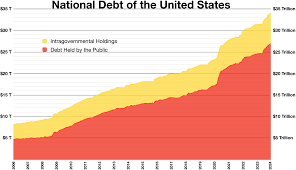
The House of Lords has an Economic Affairs Committee (EAC) which has regular inquiries into economic matters that they think will be important for members of the House of Lords to understand. The structure of these inquiries is that the committee will hold a series of meetings to which it calls expert witnesses and asks them … Continue reading Sustainability of National Debt

Electricity in France and the UK
Price of electricity in France and England By Froggy I wanted to find out why my electricity bill here in England is so much higher than that of my relatives in France. Take for example my bill for period ending 31 May 2022: it charges me 29.332p/kWh (= 0.3 euro); my sister’s bill charges her for … Continue reading Electricity in France and the UK
Quantitative Easing, or “How will you pay for it?’
Parliament Notes QE, or printing money, is capitalism’s cunning plan to overcome economic and financial crises. In the massive economic crisis of the 1930s, the US state financed public works with money it hadn’t ‘earned’ from taxes. The economies of the US and Europe have practised it since to avoid the worst disasters of the 2007/8 financial … Continue reading Quantitative Easing, or “How will you pay for it?’

Editorial – Budget Battle Lines
Editorial Budget Battle Lines The next UK budget is on 3rd March. We don’t know what position Sunak will take on the hugely increased fiscal deficit. Will he return to austerity policies quickly or defer for a year? Certainly the Labour Party response to Sunak’s budget will be an opportunity to clearly separate Labour from the Conservatives. There have … Continue reading Editorial – Budget Battle Lines
 Labour Affairs