By Eamon Dyas Over the past year there have been several exhibitions and events in the UK commemorating the 40th anniversary of the British miners’ strike including “One Year! Photographs from the Miners’ Strike 1984-85: An exhibition based on the Martin Parr Foundation’s collection” which has toured various UK venues. Martin Parr has been an … Continue reading The significance of the 1984-85 Miners’s strike
Bullock Report
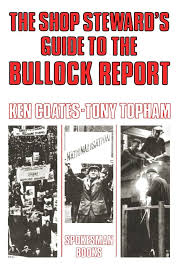
The significance of the rejection of Bullock by the Trade Unions
In the 1970s, the trade unions were so strong they had political power, as the media never stops reminding us. This power was such that a government report (the Bullock report) offered the unions an official role in deciding economic policy. Now the majority of workers are not in a union, and wages and conditions have declined … Continue reading The significance of the rejection of Bullock by the Trade Unions

Why the Workers’ Struggle is a Class Struggle
Dave Gardner [The photo above is of Ernest Bevin] “There’s class warfare, all right, but it’s my class, the rich class, that’s making war, and we’re winning.” (Warren Buffett, investor and capitalist, 2006). The quote above blurts out a truth which the political establishment and media of this country would like to keep from us. We … Continue reading Why the Workers’ Struggle is a Class Struggle
Party Politics and State Power—Editorial
In last month’s issue Labour Affairs argued that the British two-party system of representative parliamentary democracy was largely a theatre, giving the impression of serious political rivalry about substantial policies but artfully concealing underlying agreements between the parties on nearly all the important issues. Conventional party politics is an illusion of real choice. Phoney antagonisms are worked … Continue reading Party Politics and State Power—Editorial
Jack Jones speaks
Jack Jones explains his role in the Labour movement in the 1970s, and how the battle to bring in Industrial Democracy was fought and lost, making something like Thatcherism almost inevitable. An interview with Jack Jones, conducted by Labour and Trade Union Review magazine L&TUR We’d like to begin with the experience of the seventies. As … Continue reading Jack Jones speaks
Trade Union Diary
Industrial Democracy A new book has just been published: "Our trade unions, what comes next after the summer of 2022?" By Nigel Flanagan, Manifesto Press. The book is vigorously written and addresses the question of the immense weakness of the trade union movement today without flinching. It rightly addresses the question of how it came about as … Continue reading Trade Union Diary
Let’s Avoid a 1970s Rerun
The TUC have called for a large demonstration in London on June 18th in the face of the cost of living crisis. “Working people have had enough. Everything’s going up but our wages. Join the trade union movement in London to tell this government: we DEMAND better!” reads the TUC blurb. They are right and a massive … Continue reading Let’s Avoid a 1970s Rerun

Labour and the Housing Crisis – part 2.
As far as Thatcher was concerned, the problem for Britain was that the citizen had become too far separated from the operation of the market. This separation had created a gap that had been filled by the influence of the trade unionism and socialistic thinking that was responsible for the descent into the anarchy of the trade union power of the 1970s.
 Labour Affairs