Michal Lerner In this article I compare the role of the central banks in government spending in two large capitalist states, the UK, the US. I have chosen these two states because they are both states which are the monopoly issuers of their own currency. In a later article I will look at the role of the … Continue reading Central Banks and Government Spending – A Tale of Two States
National Debt
Rachel Reeves’ Budget Dilemma – Households and Governments—Editorial
Rachel Reeves will deliver her second budget on 26th November, facing a serious dilemma of her own making. By adopting two strict fiscal rules that limit government spending without tax rises, and simultaneously pledging not to increase taxes on working people during this parliament, Reeves has boxed herself into a narrow and politically dangerous corner.When … Continue reading Rachel Reeves’ Budget Dilemma – Households and Governments—Editorial
Labour Needs a U-Turn in Economic Policy—Editorial
Rachel Reeves' position as Chancellor is growing increasingly precarious. She fought the 2024 general election on a platform defined by strict fiscal rules, a refusal to raise income taxes, and a pledge to deliver economic growth. It was a politically calculated stance—economically incoherent, but designed to appeal to Conservative-leaning voters whose support Labour believed it … Continue reading Labour Needs a U-Turn in Economic Policy—Editorial
Reeves’ False Debt and Interest Problems
Throughout January, there has been much excitement in the main stream media about the state of the government finances. Apparently the ‘bond vigilantes’, by reducing the amount they were prepared to pay for a government bond, were expressing their displeasure with proposed government policies. We were told that Reeves was ‘all out of money’ and would likely … Continue reading Reeves’ False Debt and Interest Problems

Conversation with an economist: Richard Werner and the threat from central banking
John Clayden In an interview with Kim Iversen, Richard Werner covers a lot of ground . Kim's first question is "Who really runs the world? I always thought it was the central banks". Richard Werner: "Your instincts are right it is the central banks." He then gives a résumé of his career starting studying economics … Continue reading Conversation with an economist: Richard Werner and the threat from central banking
Reeves’ Debt Dexterity—Editorial
All are agreed. Britain needs large increases in government investment if the standard of living of the British people is to be improved. All are also agreed that the government does not have the money to make the required investments. We are told that government current spending on teachers, doctors, armed forces etc is greater than taxes … Continue reading Reeves’ Debt Dexterity—Editorial
Political parties and national debt—Editorial
The size of the national debt is the topic of the moment. Rachel Reeves found a difference of some £22 billion in the day-to-day spending announced by the Tories in the spring Budget in March 2024 and what they actually expected to spend. This implied a £22 billion increase in the national debt. Reeves called this a … Continue reading Political parties and national debt—Editorial
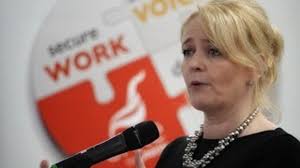
Sharon Graham Winter Fuel Allowance speech
Labour conference: Unite general secretary Sharon Graham Winter Fuel Allowance speech Unite general secretary Sharon Graham today moved the motion on winter fuel allowance at Labour party conference. The full text of the speech is below: “The nation wants food, work and homes… It wants a high and rising standard of living, security for all, … Continue reading Sharon Graham Winter Fuel Allowance speech

The father and mother school of economics
By Eamon Dyas In 1992, a year before she died, the American academic and mother of Oliver Letwin, Shirley Robin Letwin, published a book entitled “The Anatomy of Thatcherism”. In this she explored the nature of what has come to be known as Thatcherism. It is an interesting book with several insights into the concept … Continue reading The father and mother school of economics
Reeves in a Straightjacket—Editorial
The ritual of the annual Mais lecture took place on 19th March. The Mais lectures have been taking place since 1978. The year is not accidental. Thatcher was about to come to power. She proposed to abandon the postwar economic consensus of a managed economy in which the state assumed responsibility for economic areas considered crucial to economic success: health, … Continue reading Reeves in a Straightjacket—Editorial
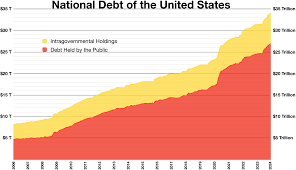
Sustainability of National Debt
The House of Lords has an Economic Affairs Committee (EAC) which has regular inquiries into economic matters that they think will be important for members of the House of Lords to understand. The structure of these inquiries is that the committee will hold a series of meetings to which it calls expert witnesses and asks them … Continue reading Sustainability of National Debt

Taxing Issues
Martin Seale Jeremy Hunt’s November Autumn Statement was a clever piece of work. It had two objectives. Firstly, to win the next general election. Secondly, if the Tory Party did not win the next general election, to guarantee that any Labour administration would fail. Hunt’s trump card in achieving this dual objective is the fiscal rule book. Hunt, … Continue reading Taxing Issues
MMT Debate
Below we reprint selections from a lively debate on Modern Monetary Theory (MMT) that has been taking place under the auspices of the Workers’ Party of Britain. Those who are interested can access the full debate on the Workers Party website. MODERN MONETARY THEORY (MMT) FOR WPB Chris Williamson No political party in Britain has … Continue reading MMT Debate

Labour’s Economic Model – Trust the Private Sector
Martin Seale The speech by the Shadow Chancellor, Rachel Reeves, to the 2023 Labour conference shows that a Starmer government could rapidly become dysfunctional. In her speech to the 2023 Labour Party conference, Rachel Reeves stated “Today, I make this commitment to you, and to the country: Out of the wreckage of Tory misrule, Labour … Continue reading Labour’s Economic Model – Trust the Private Sector

Tory and Labour U-turns on Aid to Developing Countries
(The image above comes from the International Development Committee) Michael Murray Introduction The UN requires that countriesallocate 0.7% of their Gross National Income (GNI) on Official Development Assistance (ODA) for the purposes of the economic development and welfareof developing countries. TheInternational Development (Official Development Assistance Target) Act 2015 lays down how the UK will meet this requirement … Continue reading Tory and Labour U-turns on Aid to Developing Countries
The Independence of the Bank of England—Editorial
Central Bank Independence Readers will be familiar with the term ‘independence of the central bank’. Of late, it has been much referred to in the media. The tone is always that this independence is a good thing. And Labour proudly remind us that the Bank of England (BoE) was made independent by Gordon Brown in 1998 when he … Continue reading The Independence of the Bank of England—Editorial

How to pay for it. The case for the elimination of the cap on child benefit.
An imaginary interview between the BBC and a progressive Labour Party by Michal Lerner BBC: Labour says that it will eliminate the cap on child benefit. That will cost some £1.3 billion. How will Labour pay for it? LP: A Labour government will pay for it the way British governments pay for everything that has been approved by … Continue reading How to pay for it. The case for the elimination of the cap on child benefit.
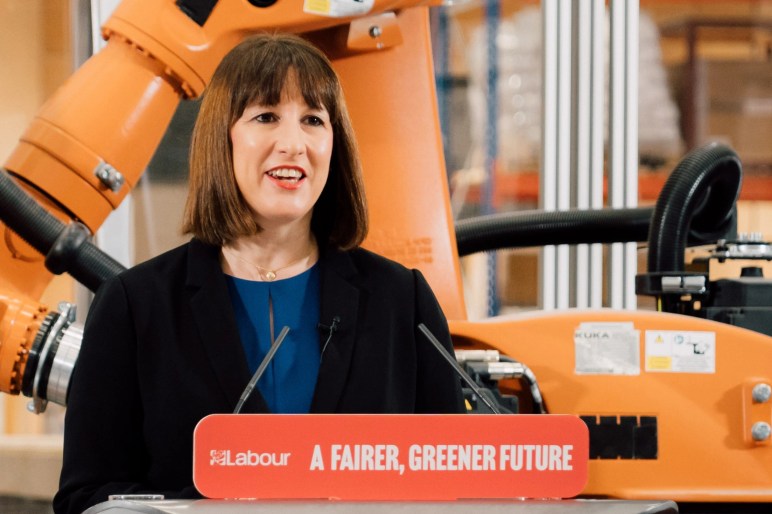
An Active State—Rachel Reeves in America
Martin Seale Rachel Reeves made an interesting presentation to the Peterson Institute in Washington DC on 24th May. The speech was accompanied by a 33 page document called “A New Business Model for Britain” in which it was stated: “The causes of Britain’s economic weaknesses run deep, however. For too long, Britain has been held back by two misguided … Continue reading An Active State—Rachel Reeves in America
 Labour Affairs