Michal Lerner In this article I compare the role of the central banks in government spending in two large capitalist states, the UK, the US. I have chosen these two states because they are both states which are the monopoly issuers of their own currency. In a later article I will look at the role of the … Continue reading Central Banks and Government Spending – A Tale of Two States
Economic Policy
Venezuelan oil, Sanctions and Petrodollars
Michal Lerner The name Petrodollar is used to designate dollars that are used to buy oil. So if country X buys 1 million barrels of oil at $70 dollars per barrel from an oil exporter and pays for that oil in dollars, then an account at some US bank will be marked up by £70 … Continue reading Venezuelan oil, Sanctions and Petrodollars
Money, Money, Money . . .
Magnus Langton On Sunday August 15th, 1971, United States of America President, Richard Nixon addressed the nation and announced, “I have directed Secretary Connally to suspend, temporarily, the convertibility of the dollar into gold . . .”. With that, the Bretton Woods Agreement of 1944 came to an end. This settlement had defined the post World … Continue reading Money, Money, Money . . .
Can Reeves’ Budget Save Labour?—Editorial
The problem that Reeves had to deal with in her November 2025 budget was how to reverse the increasing likelihood of Reform becoming the largest party in the 2029 general election. On this measure the budget will most likely be a failure. While we can all feel a sense of relief that she has, under … Continue reading Can Reeves’ Budget Save Labour?—Editorial
Digital I.D. it’s all a matter of trust . . .
Magnus Langton For some time the British government have been talking about the Brit Card, a physical form of personal digital identification for the British people. In September 2025 Sir Keir Starmer announced plans to launch a universal digital identification scheme in the UK. The Gov.uk website tells us the digital ID will hold: Your … Continue reading Digital I.D. it’s all a matter of trust . . .
Rachel Reeves’ Budget Dilemma – Households and Governments—Editorial
Rachel Reeves will deliver her second budget on 26th November, facing a serious dilemma of her own making. By adopting two strict fiscal rules that limit government spending without tax rises, and simultaneously pledging not to increase taxes on working people during this parliament, Reeves has boxed herself into a narrow and politically dangerous corner.When … Continue reading Rachel Reeves’ Budget Dilemma – Households and Governments—Editorial
The failure of British industry – a personal experience
By Eamon Dyas While the United States was the world’s largest producers of automobiles in 1950 the majority of its production was for its home domestic market and not for export. At the same time the UK exported 75% of its vehicle production leaving it as the world’s largest exporter of automobiles in 1950 meaning … Continue reading The failure of British industry – a personal experience

The Case of the German Left
Some 150,000 people attended the Unite the Kingdom march in London on 13th September 2025. The typical response of many on the left is to see the march as indicative of the rise of fascism and racism. Racists may indeed have participated in that march, but we believe the majority of participants were people who feel they have … Continue reading The Case of the German Left
Starmer Shuffles—Editorial
As we go to press it appears that Starmer has made his first move against his chancellor Rachel Reeves. Starmer has no understanding of economics but he does grasp that the huge drop in Labour’s position in the polls can mostly be explained by the economic policies that Reeves is following. Darren Jones, who had … Continue reading Starmer Shuffles—Editorial
LABOUR AFFAIRS SEPTEMBER 2025
Labour Affairs will appear a few days late this September. As you wait for the full issue, here is an article by Eamon Dyas that tackles the crucial issue of today: how can a society atomised by the domination of the economy by finance function at all? Industrial capitalism created a class of people who produced things … Continue reading LABOUR AFFAIRS SEPTEMBER 2025
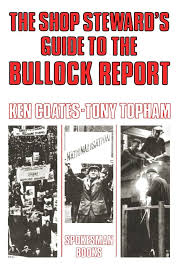
The significance of the rejection of Bullock by the Trade Unions
In the 1970s, the trade unions were so strong they had political power, as the media never stops reminding us. This power was such that a government report (the Bullock report) offered the unions an official role in deciding economic policy. Now the majority of workers are not in a union, and wages and conditions have declined … Continue reading The significance of the rejection of Bullock by the Trade Unions

Rebuild British Manufacturing
From the think tank “Rebuilding Britain” Labour Affairs has carried from the beginning the link to “Rebuilding Britain” (See “Links”, top right of home page). This month we reproduce the Preface and conclusion of their pamphlet “Rebuild British Manufacturing” Rebuild British Manufacturing A Strategy for Revival The pamphlet is available at: https://rebuildbritain.org.uk/manufacturing/ Preface Britain’s greatly diminished … Continue reading Rebuild British Manufacturing
Profiteering is breaking the economy
A report by Unite The Union Part of the “Unite Investigates” series Unite's latest report has analysed nearly 17,000 companies in the UK and found that average profit margins have soared by 30% compared to the pre-pandemic period. This report is the largest post-pandemic study of UK profit margins to date. We have exposed that corporate profiteering isn’t … Continue reading Profiteering is breaking the economy

Markets and Socialism
Dave Gardner Markets as social institutions constrained both by custom and law. Markets have always been a tricky subject for socialists. Capitalists favour a market in labour where, in theory for a wage in return for labour power, capitalists and workers meet as equals to negotiate mutually advantageous arrangements. Any attempts at conscious co-ordination, either … Continue reading Markets and Socialism
Labour Needs a U-Turn in Economic Policy—Editorial
Rachel Reeves' position as Chancellor is growing increasingly precarious. She fought the 2024 general election on a platform defined by strict fiscal rules, a refusal to raise income taxes, and a pledge to deliver economic growth. It was a politically calculated stance—economically incoherent, but designed to appeal to Conservative-leaning voters whose support Labour believed it … Continue reading Labour Needs a U-Turn in Economic Policy—Editorial

Liberalism, Neoliberalism and the Trade Union Movement
Martin Seale The liberalism of the late 19th century was characterized by the view that the role of the state should be limited. The state would protect the nation from external enemies, enforce the rule of law (much around property) and provide some limited form of education. British capitalism seemed to function reasonably well up to the 2nd half … Continue reading Liberalism, Neoliberalism and the Trade Union Movement
The Workhouse Party
Keir Starmer took a decision some years ago to change the electoral base of the Labour Party so that many people, who would traditionally vote Conservative or Liberal Democrat, might now vote Labour or at least abstain from voting for their usual party. A major tactic to achieve this result was a commitment to fiscal rectitude. … Continue reading The Workhouse Party

Pensions as Ponzi & Evil Keynesianism
By Gwydion M. Williams Trump and Musk are giving voice to what members of Britain’s Labour government must be privately thinking. Saying more crudely what the elite have come to believe. It is just not possible to fund welfare to the needy. The state risks going bankrupt, and welfare is anyway mostly wasted. It is not explained why … Continue reading Pensions as Ponzi & Evil Keynesianism
 Labour Affairs