A report by Unite The Union
Part of the “Unite Investigates” series
Unite’s latest report has analysed nearly 17,000 companies in the UK and found that average profit margins have soared by 30% compared to the pre-pandemic period.
This report is the largest post-pandemic study of UK profit margins to date. We have exposed that corporate profiteering isn’t confined to just the largest companies or those in a select few sectors. Profits have spiralled out of control everywhere.
This report is the third in a series of contributions on profiteering. Our aim is simple: to uncover who has really profited from pandemic and the inflationary pressures that have followed.
Key Findings
- Average profit margins have increased by 30% across our sample of nearly 17,000 companies.
- In total, the companies we analysed made £156 billion more profit over 2021 and 2022 than if margins had stayed at 2018 levels. That’s equivalent to £5,500 extra spent by every UK household.
- The FTSE 350 companies are paying 20% more to their shareholders, through share buybacks and dividends, post-pandemic than they were pre-pandemic.
- Net investment by FTSE 350 companies also fell from £37 billion per half year in 2018 and 2019, to £9 billion between 2022 and 2023.
Full report available below: view or download the largest post-pandemic study of profiteering in the UK :
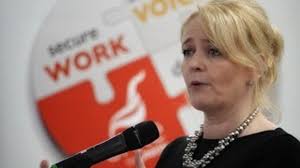
FOREWORD BY SHARON GRAHAM: WE NEED TO TAKE
BACK POWER FROM THE PROFITEERS
Many politicians wish we’d stop talking about the cost of living crisis.
Inflation is finally falling, they say. Yes, our energy and food bills jumped
through the roof for a couple of years, but now the markets have adjusted
themselves, the economy has stabilised. It’s all back to normal.
Except, as households up and down the country know, in this new normal
we’re worse off than ever. Inflation may have come down, but bill hikes
and price rises are baked in. We’ve gone through the biggest fall in real
wages, the biggest cut to living standards, in generations. The markets
may have stabilised, but our industries and public services are visibly in
tatters.
We see it all around us. The economy is broken. The model has failed.
Workers and communities are hit with crisis after crisis, then each time
the dust settles the “new normal” leaves us worse off than before.
But some do very well from a crisis. What’s happened in the last three
years is, underneath it all, a major redistribution of wealth away from
workers’ wages to corporate profits.
We’ve analysed the accounts of almost 17,000 companies – the largest
assessment of profiteering in the UK since the pandemic – and the results
are conclusive. Corporate profit margins have increased by a massive
30% since 2018/19. Note that’s margins, not just nominal profits in
money terms, so that jump isn’t affected by inflation.
Our research also shows how increased profits haven’t gone into
investment for future production and jobs – the UK lingers on the lowest
investment rates of all advanced countries. Instead, they’ve been drained
out into payments for investors. Shareholder payouts for the big FTSE
350 companies have jumped up 20% since the pandemic.
And this is why our economy is broken. Because of the choices of
executives, investors, and politicians who choose short-term profits and
fat dividends over investing to rebuild our industries and public goods.
Their choices are tearing apart the fabric of our economic and social
commonwealth.
Profiteers get away with it because they have the power. Over four
decades of free market economics, as we’ve sold off the family silver and
stripped away all controls on the grasping hand of the market, wealth and
power have become ever more concentrated in the hands of a tiny
minority.
There is only one real check on their power. Our power, the power of the
organised working class. This is why at Unite we have one clear aim, to
rebuild the trade union movement. To rebuild the power to claim our
share. That means restoring collective bargaining, that means organising
across our industries and communities, that means restoring pride and
strength in the collective. And then we can insist that other choices are
taken.
In solidarity,
Sharon Graham
 Labour Affairs