Catherine Dunlop
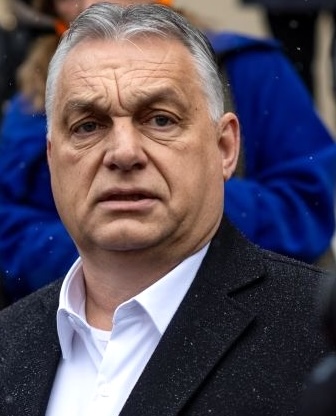
[The photo above shows Viktor Orbán]
Socialists call themselves socialists, conservatives call themselves conservatives, but so-called populists don’t call themselves populists. It is a derogatory term.
The word itself indicate that the people are involved, either as a mass to be flattered and used, as in demagogy, or simply involved. The implication is that the people, if not guided by wiser men, would be better left undisturbed.
Populism is a vague term used against politicians who try to mobilize the populace. Populism consists in encouraging people to vote when it would be better if they didn’t. A documentary about the Brexit campaign shows Dominic Cummings, as a strategy, seeking out people who don’t normally vote.
This aspect is hidden under the vague word ‘populism’ and is not made explicit, because that would be a denial of democracy: in a democracy, all voices are supposed to have an equal right to be heard.
Who is condemned by this term, the politician or the masses? First the politician, and by implication the masses.
What matters is not just what the politician says, it’s which sections of society he is trying to mobilize. For example, Zemmour [French right-winger] is not a populist because his speech is full of literary allusions; he is not appealing to the masses, but to the cultured section of society. Marine Le Pen tries to have a discourse that is acceptable to the middle class in order to avoid the populist label.
The left tends to deplore populism, partly probably because it is not socialist, but mostly because it ignores identity politics. Using the term populist is therefore a joint attack by the left and the liberals against leaders who address certain sections of the population, including the economically weakest. Both the left and the liberals have a globalist outlook rather than a national one; for them therefore immigration is not a problem. For those on the contrary who are attached to where they live and don’t see themselves as citizens of the world, the arrival of mass immigration is a problem. Both the left and liberals, with their globalist outlook, favour imposing their views on the entire world through war. Populists do not.
This explains why the left condemns some politicians who take measures in favour of the working class. Whether the politicians can improve people’s living conditions is less important than their adherence to what the left sees as morally superior ideology, which includes immigration and war.
Populist policies are socially conservative, and since they are aimed at the lower classes, we can maybe conclude that the woke agenda is not popular among them. (One exception may be the issue of abortion rights; socially conservative politicians tend to want to restrict access to abortion, while easier access is generally popular).
Economically, populist policies vary. Recently, the Spectator called Biden’s economic policies “populist” because they address the concerns of the working class and lower middle class and involve a degree of national preference.
I came across an interesting take on populism by Paul Betts, who says about Victor Orban:
“Liberalism’s focus on the rights of minorities has been replaced by populist claims about the rights of the majority.”
(Paul Betts, Ruin and Renewal: Civilising Europe after the Second World War, p. 435)
This leads to the conclusion that populism is a movement to defend the rights of the majority, while avoiding any notion of socialism.
 Labour Affairs