By Christopher Winch
Author’s Note. This article was first published in July 2003. It is a mark of the lack of progress that the left has made since then, that in preparing it for Labour Affairs in 2024 I have had to make minimal changes, like substituting ‘Starmer’ for ‘Blair’.
It is often said by anti-socialists that one of the motivations for socialism and communism is a desire for everyone to be identical in all important respects and envy of those who are rich or talented. For these disreputable reasons, so it is said, socialists are in favour of equality. Equality, they say, leads to a society where talents are stifled and dynamism of every kind is extinguished. Often people on the left don’t know how to respond to these charges, and perhaps one reason for this is that they themselves have not thought through what they understand the socialist demand for equality to be. Equality, like sameness, is a relative idea; something can only be equal to something else in some respect or other, just as two things that are the same are the same in some respect. Where two things have the all the same properties or are equal in every respect then they are identical. Socialists clearly don’t want everyone to be identical – so what do they want? We need to understand in what respect equality is desirable.
An answer that seems to be popular is that people should all do the same things: everyone should have the same education, everyone should be in paid employment, for example. When seen like this, equality is in danger of looking like uniformity, since this scheme suggests a lack of variety in the way in which people are encouraged or allowed to live their lives. It must be admitted that a lot of people who consider themselves to be socialists do think like this. They cannot see that giving everyone exactly the same kind of education up to the age of 16 and beyond is not necessarily good for them; they assume that everyone should be in paid employment, whether they want to be or not. If this is what socialists want, then they should think again. A society in which people are valued should be one where they are valued for what they are, for the contribution they can make to the common life, or by developing their talents to the full. And it is evident that a complex society needs many different kinds of talents and interests that need to be encouraged, nurtured and applauded. This means that socialists should feel that they have failed if they do not succeed in developing human individuality in the form of diverse interests and abilities. It is of the essence of developing abilities that they need to be worked on if they are to grow and none of us can develop more than a few abilities to a high degree. We must accept therefore that we are all going to turn out differently if we are serious about developing our talents.
So in what sense are socialists egalitarians? People should not all receive exactly the same education, because then not all will find it easy to pursue the things that they are most interested in and that they can do best. In a society that wants musicians, engineers, sportspeople and technicians, as well as academics, managers and clerks, there will need to be opportunities to develop those abilities. This means that there should be schools and colleges whose job it is to promote a love of and excellence in engineering, music etc. Anyone serious about developing institutions that are genuinely specialist would have to spend serious money on buildings, equipment and teachers with experience of the activities that they are preparing young people for. In Britain today, specialist schools have token sums of money and their claim to be genuinely specialist is nothing more than a gesture. Further Education colleges and their teachers are starved of money and resources, so that the sector as a whole gets something like one fifth of the per capita income of universities. There is no way that the current government would spend serious money on something that might appeal to large numbers of working people and divert money away from the education of the middle class. Some forms of education may be more expensive than others, particularly education that requires specialist staff and equipment. Socialists believe that everyone should have the opportunity to develop their abilities to the maximum extent consistent with the resources available within the society. This means variety, not uniformity in the education system and a willingness to make good the resource gap between universities and vocational institutions.
There are skill shortages in some areas but on the whole employers have low expectations of what they expect from employees. If there is no interest in other kinds of specialist, what is the point in encouraging diversity? If you do want to encourage diversity it is not enough to increase the supply, you must make sure that there is a demand and there is not much sign of that among the employers, who are the only people this government really listens to.
Where Socialists should be More Egalitarian.
It is often said by critics of socialism, that socialists must be motivated by envy of the rich and talented. As far as the talented are concerned, I hope that I have disposed of that argument and shown it to be bogus. What then of the rich? Envy is an understandable, if petty, emotion and it is doubtful whether it could motivate a significant social and political movement. Nevertheless, socialists have never really shaken off the charge that they are motivated by envy. So what should they say? There certainly are critical issues to do with wealth and income. As social creatures, we are conscious of our place in society. We wish to be recognised for what we do well, but we don’t wish to be treated as if we are of little or no worth. Very large inequalities of income and wealth make us feel devalued, even if we have the necessities of life and so they should be avoided as much as possible. It is not necessarily envy that motivates people, but the feeling of being devalued, by being poorly off relative to other people and ultimately powerless. This feeling explains a lot of the anger caused by the award of ‘fat cat’ salaries and perks. But there is a far more important argument that is not sufficiently exploited by socialists. Inequalities of wealth also lead to inequalities of power and thus prevent people from realising their own hopes. The opportunities of some people, if they are backed with disproportionate power and wealth, can stifle those of people who are less well off. If stockbrokers force up the prices of houses through their extravagant salaries then everybody else finds it more difficult to buy a house. If the Jeff Bezos and the Rupert Murdochs finance newspapers with their vast wealth, then it becomes difficult for people of more modest means to make their voices heard. If private patients buy up the best doctors, then these are not available for people who are not so well off.
This point is particularly telling in a liberal society whose main value is supposed to be that of allowing everyone to pursue their own projects in life. If inequalities of wealth and power ensure that this cannot happen, then such a society is something of a sham. It is ironic that the liberal philosopher of welfare, John Rawls, half realised this, by recognising that the full value of liberty has to be secured by preventing those with large resources from blighting the aspirations of the less well-off. If he had thought through the implications of this insight, his famous Difference Principle, which involves the prioritisation of the least well-off, would have to be applied before considerations of the distribution of liberty could even be considered. The redistribution of wealth would be a priority for anyone who was serious about promoting the maximum amount of liberty.
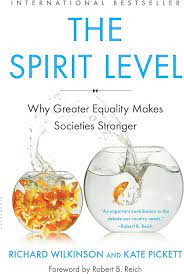
There is powerful empirical evidence that, beyond a certain level, increases in wealth have diminishing returns in terms of well-being and that unequal distribution of wealth has a detrimental effect on people’s sense of their own well-being. And when you think about it, what is the point of a society accumulating wealth and then distributing it in such a way as to make people more miserable than they previously were? So the policy implication seems to be that there should be far less inequality in wealth and income than there currently is, while at the same time more diversity of education and occupation should be encouraged. The redistribution of wealth could not only alleviate poverty but also allow for a more diverse education system. It could also allow for a carer’s income which would mean that those who wished to bring up children or to look after elderly or infirm relatives could do so with dignity, while at the same time eliminating some of the social cost that arises from the inability of people to bring up their own children or to look after members of their family. When governments make even modest attempts to do this, it happens against a depressing if predictable backdrop of complaint by some on the left that choice is being removed, when in fact the opposite is happening. The influence of feminism has meant that domestic work that is not part of the market is seen as ‘reactionary’. As far as liberal leftists are concerned, if you are not in paid employment you are a cost on society. This attitude ties in neatly with the right wing perception of all those not in paid employment (‘the workless’ in their inimitable phrase) as needing to be herded into paid employment, irrespective of its value or quality.
Public goods such as collectively owned transport, health care and education have the social effect that their usage does not harm the enjoyment of other people. A good surgeon, teacher or railway service are things that we can all benefit from without harming the use of other people. In the private sector, the use of the best surgeons and teachers is appropriated exclusively for the rich. The excessive use of private transport atrophies public transport systems which the less well-off tend to rely on. So here is a socialist programme: more public goods, less inequality of wealth and income and more chances for people to develop their talents and interests.
It is highly unlikely that Starmer and his clique would be attracted by such a programme, as it would involve offending businessmen and the wealthy. However, if it can be shown that greater equality actually increases people’s choices, gives them more control over their lives and actually makes them happier, it is something that the left ought to take seriously, if only they can end their own muddled thinking about the relationship between equality and uniformity.
For more on the impact of inequality from a variety of sources see:
https://equalitytrust.org.uk/books-inequality
First published July 2003. A PDF of the whole magazine is available at https://labouraffairsmagazine.files.wordpress.com/2024/01/ltur-130-july-2003.pdf
 Labour Affairs