Martin Seale
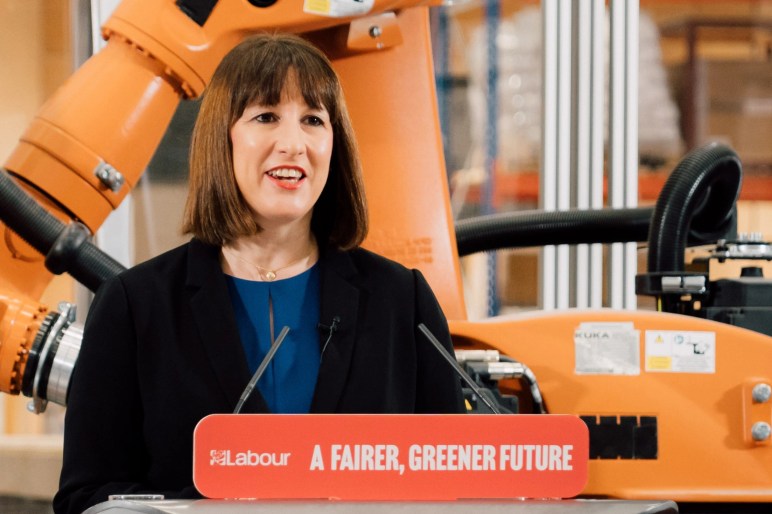
Rachel Reeves made an interesting presentation to the Peterson Institute in Washington DC on 24th May. The speech was accompanied by a 33 page document called “A New Business Model for Britain” in which it was stated:
“The causes of Britain’s economic weaknesses run deep, however. For too long, Britain has been held back by two misguided models of economic thought.
The first error is to think that the state has little strategic role in the economy beyond removing barriers to free enterprise, correcting the occasional market failure, and redistributing the proceeds of growth. That view was wrong forty years ago, when it was enthusiastically embraced by the Thatcherites, and it is wrong today. Government does indeed have a role to play in tackling market failures, but its role must go beyond that too. A modern state must be more active, making and shaping markets that are essential to a nation’s resilience and future prosperity.
The second error that persists among policymakers is the belief that the people and places that matter to an economy are few in number and that a nation can rely on growth in just one corner of the country or a handful of industries. The result has devalued people and places, and wasted so much human potential. In the process, it has left our economy dangerously exposed to the shocks that emanate from this uncertain world.”
It is somewhat surprising that Reeves dared openly challenge the Thatcherite vision and called for an active state which would override free markets that were felt not to be acting in the nation’s long term interests. Reeves rarely says anything which she thinks would upset the powers that be.
The powers that be were upset and let their displeasure be known in a full page analysis on June 7th in the FT of what they called “Labour’s surprisingly bold agenda”.
Mike Riddell, a global bond fund manager at Allianz Global Investors is quoted as saying “Any additional unexpected borrowing risks another gilt meltdown.”
Riddell is here referencing the drop in gilt prices that followed Kwarteng’s budget in September 2022. He is suggesting something similar could happen if Labour tried to go ahead with its planned £28 billion investment.
Comments like this appear to have panicked Labour since they believe that they are dependent on the markets for the funds that they need to implement their policies. Unsurprisingly, Labour immediately went into grovelling mode. Reeves announced that, what had been the sacred pillar of Labour’s economic revival plan, spending £28 billion a year fighting climate change, would have to be delayed. Reeves accepted the suggestion in the FT that the money was not there to do it, at least not immediately. Her fiscal rules required that the debt to GDP ratio should be falling. Fighting climate change, usually considered a sacred task amongst left wing people, has a lower status than keeping to fiscal rules.
It’s an argument that most people would find hard to challenge. It fits in with their experience of the world. When interest rates go up, their mortgage payments go up. They have to cut back on spending on other things. It makes sense that a government would be similarly constrained.
But this argument fails to grasp that the UK is a currency issuing government and a currency issuing government is fundamentally different to a currency using household. Until left wing people understand the implications of this distinction, they will always lose arguments with right-wing monetarists.
The spending of a currency using household is limited by its income and what it can borrow and what assets it can sell.
The spending of a currency issuing government is not limited by its ability to borrow. Indeed, it would be more accurate to say that a currency issuing government never borrows money. It has no need to, since, as a currency issuer, it has an infinite supply of it.
Rishi Sunak spent £300 billion (10 times what Reeves plans to borrow) in the space of a year to finance Furlough payments without any change in interest rates or increase in taxes. There was no dependence on the markets. Rishi Sunak simply instructed the Bank of England (BoE) to make the necessary Furlough payments. The BoE created the money to do this and registered it as a loan to the government. Since the treasury owns the BoE, Sunak was effectively borrowing from himself.
The markets hate to be reminded of what happened during Covid. It makes clear how irrelevant they are to government spending. They are keen to resurrect the myth that any government spending requires their approval.
By refusing to challenge this myth, Reeves is guaranteeing that any future Labour government will be much less effective than it could be.
 Labour Affairs